Showing posts with label Sea ivory. Show all posts

Tuesday, 2 December 2014

Rockpooling destination: Walls, Shetland September 2014

The low cliffs around Walls incline steeply toward the sea and are covered by lichens, in this sheltered inlet a distinct transition has formed between the yellow and grey lichens of the supralittoral and the tar lichen of the littoral fringe. Below the lichens are bands of barnacles and then fucoids.


Habitat classification:
Biotope complex
LR.MLR.BF (Barnacles and fucoids on moderately exposed shores)
LR.FLR.Lic.(Lichens on supralittoral and littoral fringe rock).
Biotope
LR.MLR.BF.FspiB (Fucus spiralis on full salinity exposed to moderately exposed upper eulittoral rock)
LR.FLR.Lic.Ver (Verrucaria maura on littoral fringe rock)
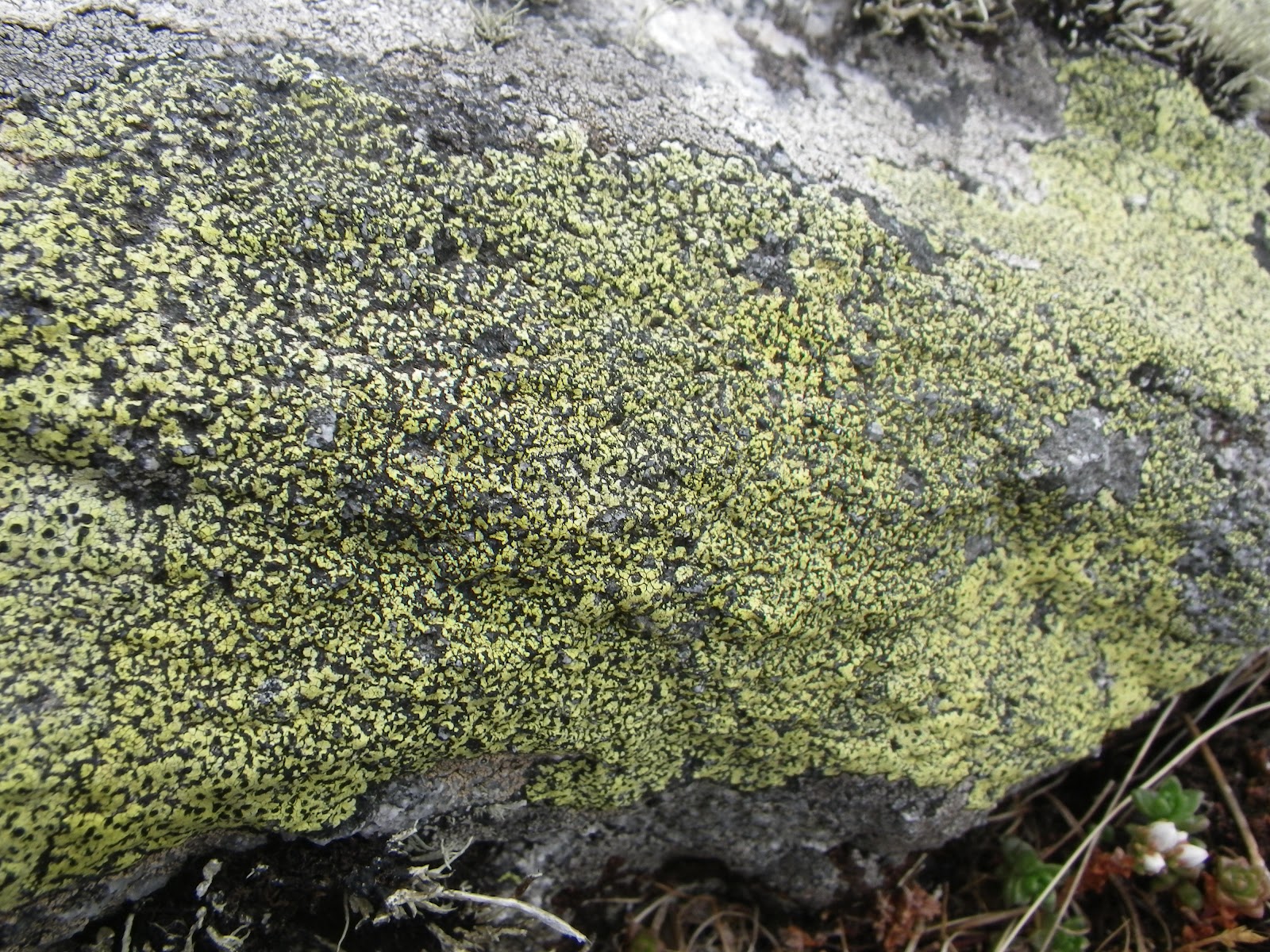
LR.FLR.Lic.YG (Yellow and grey lichens on supralittoral rock)


The low cliffs slope steeply and are characterized by lichens. Habitat classification: LR.FLR.Lic.(Lichens on supralittoral and littoral fringe rock).


Yellow and grey lichens occur with sea pinks in the supra littoral zone, below which tar lichen forms a black covering over the rocks. Habitat classification LR.FLR.Lic.YG (Yellow and grey lichens on supralittoral rock) and  LR.FLR.Lic.Ver (Verrucaria maura on littoral fringe rock).
Sea ivory (Verrucaria maura), grey, orange and brown lichens are commonly encountered within the habitat yellow and grey lichens on supralittoral rock.


Yellow and grey lichens occur in the supra littoral zone, below which tar lichen forms a black covering over the rocks in the littoral fringe with barnacles and fucoids below . Habitat classification LR.FLR.Lic.YG (Yellow and grey lichens on supralittoral rock),  LR.FLR.Lic.Ver (Verrucaria maura on littoral fringe rock) and LR.MLR.BF (Barnacles and fucoids on moderately exposed shores).


Tuesday, 4 December 2012

Common Lichens of the sea shore


Lichens are symbiotic fungi that occur throughout the terrestrial environment and into the intertidal zone where they colonise suitable hard substrates of the upper shore and splash zone.

They are often the defining species of splash zone habitats and come in a variety of forms and colours.

Below are images of the common lichens you may encounter whilst rock pooling around the UK:
  
An orange lichen (Xanthoria parietina).

Black lichen (Lichina pygmaea).

Tar lichen (Verrucaria maura) and an orange lichen.

Tar lichen  (Verrucaria maura) forms a thin black crust over the rock


Above the high tide mark Sea ivory (Ramalina siliquosa) and the orange lichen, Xanthoria parietina occur.
Sea ivory (Ramalina siliquosa)

Sheep are partial to sea ivory!

Possible Parelle (Ochrolechia parella).


Anaptychia spp.

Tuesday, 4 September 2012

Rocky shore - Coll- The Hebrides


Rock pooling destination: Coll, Scotland June 2012
The upper shore is characterised by steeply inclined rock dominated by lichens.

Habitat Classification:LR.FLR.Lic (Lichens or small green algae on supralittoral and littoral fringe rock).
The steep uppershore is dominated by Lichens.Habitat Classification:
LR.FLR.Lic (Lichens or small green algae on supralittoral and littoral fringe rock).

Sea pinks / Sea thrift

Sea Ivory (Ramalina siliquosa) and orange lichen (Xanthoria parietina).

Orange lichen (Xanthoria parietina).

Orange lichen (Xanthoria parietina).

A lichen

A lichen

Parelle (Ochrolechia parella)
Lichens descend down the shore.