Showing posts with label Egg wrack. Show all posts

Thursday, 5 March 2015

Rockpooling Destination: Great Yarmouth, December 2014

During the winter months a strandline forms along many of the sandy shingle shores of Norfolk.

Many different things can be found washed up among the strandline including the remains of seaweeds, sponges, hornwrack, hydrozoans, crabs and shells.


The shore at Great Yarmouth is comprised of sand and shingle, a succession of strand lines mark the varying tide heights.Habitat classification: LS.LSa.St (Strandline) and LS.LSa (Littoral sand).


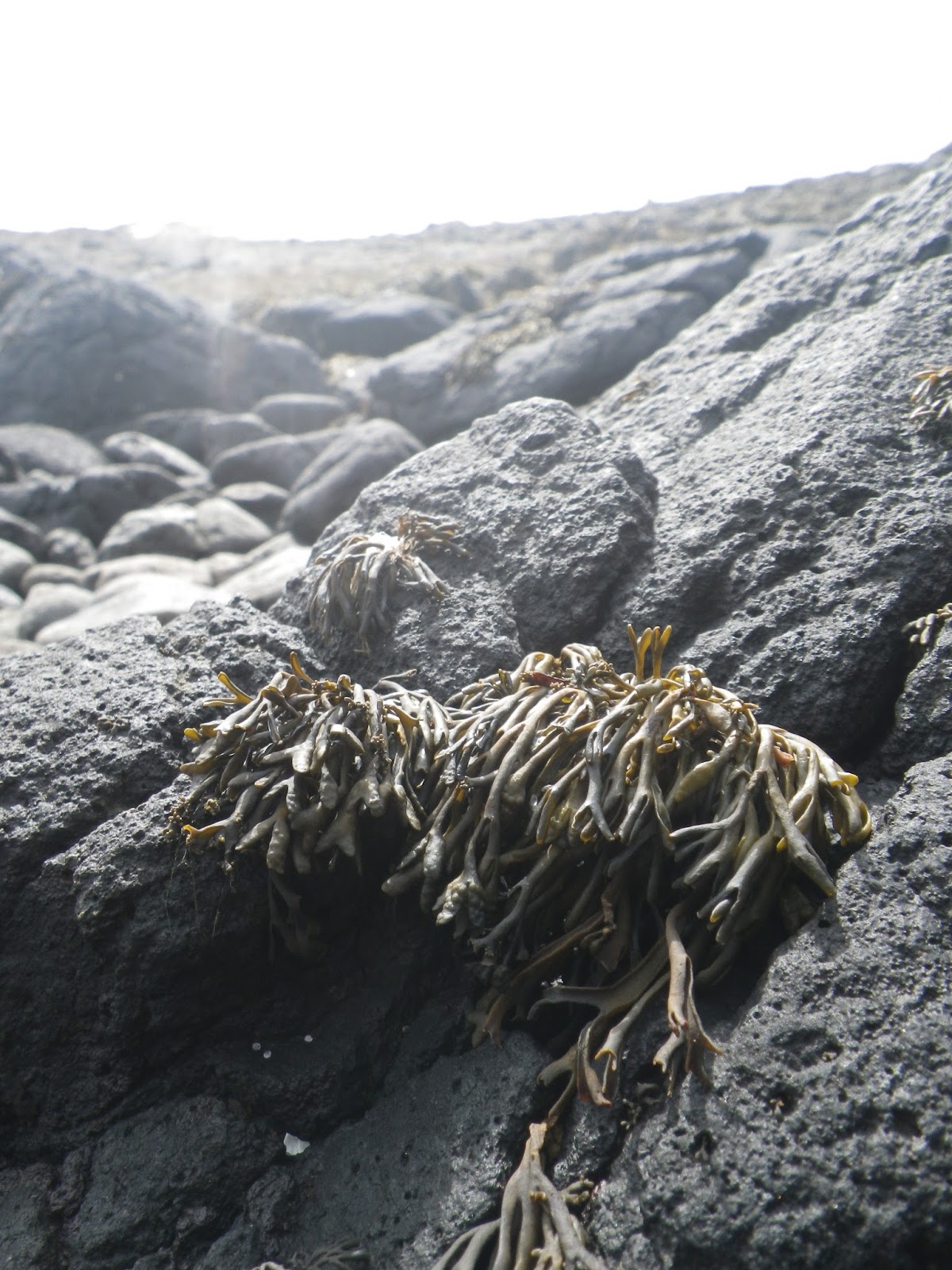
A tree weed washed up on the shore.


A tree weed washed up on the shore.


A tree weed washed up on the shore.


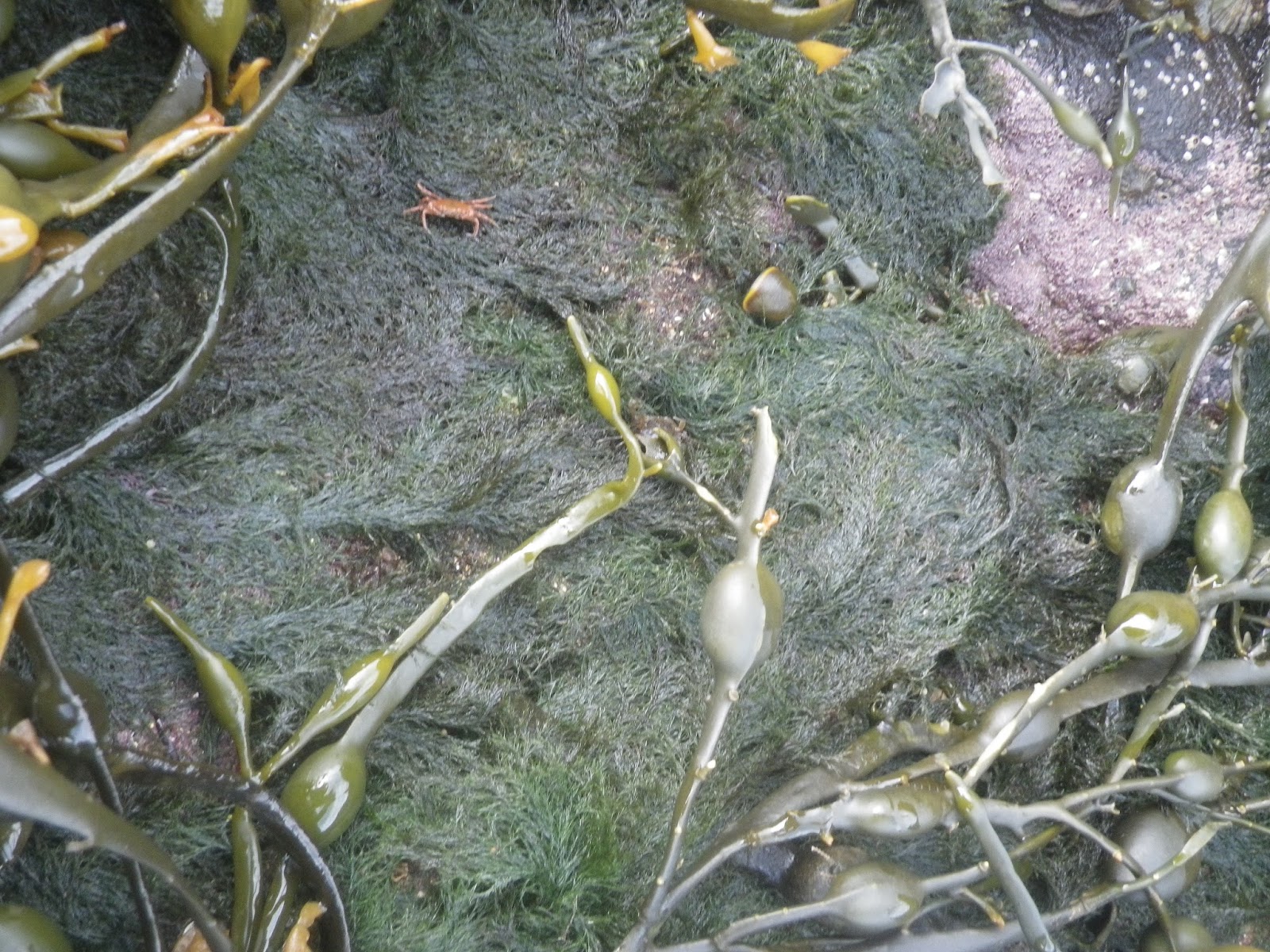
Osmundea sp growing as an epiphyte of Egg wrack (Ascophyllim nodosum).


Osmundea sp growing as an epiphyte of Egg wrack.


Osmundea sp growing as an epiphyte of Egg wrack.


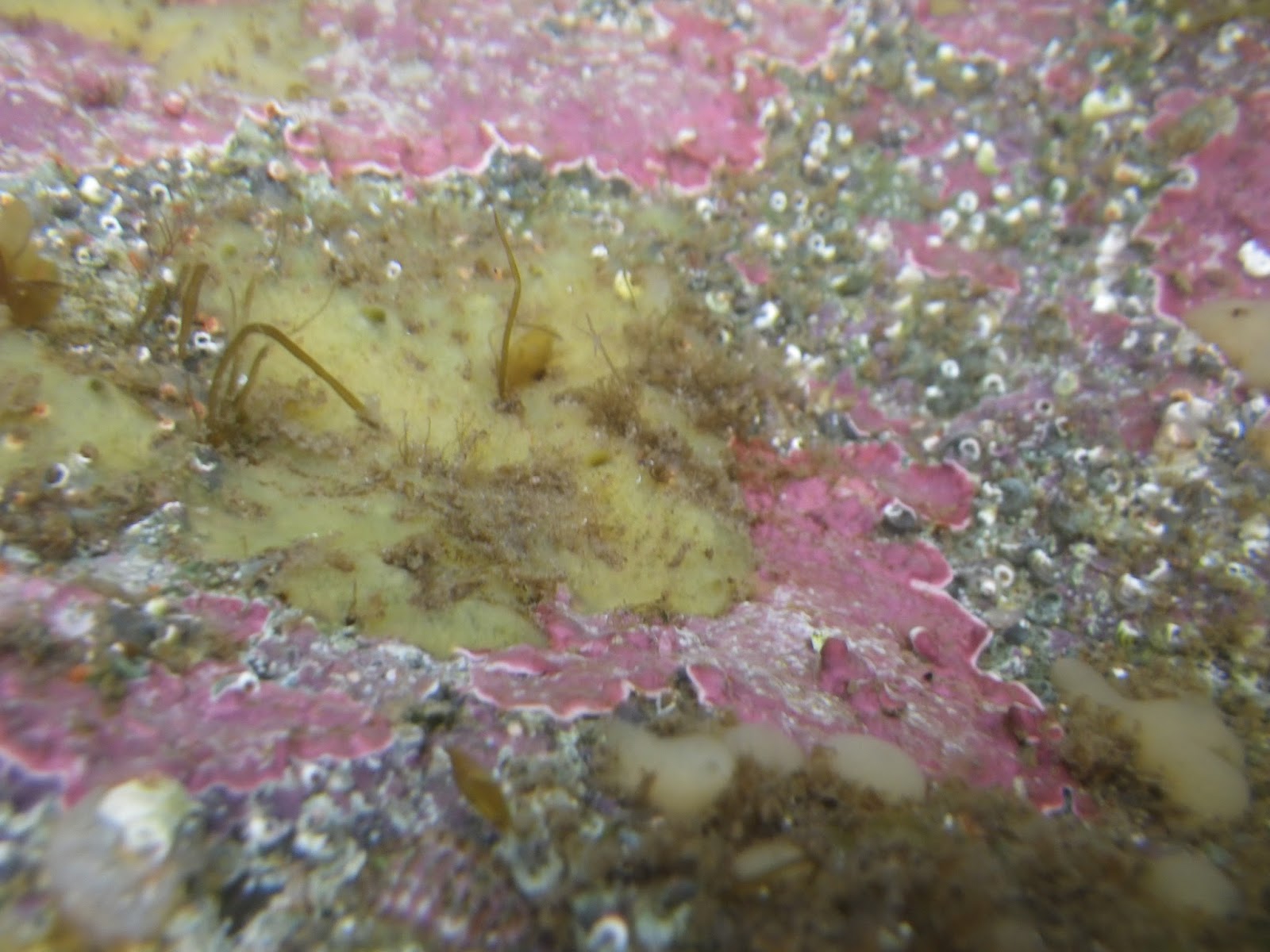
Crinkle edge weed.


A small spotted catshark (Scyliorhinus canicula) egg case.


Friday, 28 November 2014

Rockpooling destination: Walls, Shetland September 2014

The shore comprised of outcrops of bedrock, boulders, cobbles and pebbles slopes gently to the low water mark and is positioned within a sheltered inlet on the North Western extend of Shetland main land.

Lichens cover the supralittoral rock and extend onto larger boulders and bed rock of the upper shore. The remaining boulders, cobbles and pebbles of the shore are covered by sparse barnacles, periwinkles and further down the shore a blanket of fucoids.


Habitat classification:

Substrate
LR (Littoral rock)
Habitat
LLR (Low energy littoral rock)
FLR (Features of littoral rock)
Biotope complex
LR.LLR.F (Fucoids on sheltered marine shores)
LR.FLR.Lic (Lichens on supralittoral rock)
Biotope
LR.LLR.F.Asc (Ascophyllum nodosum on sheltered mid eulittoral rock).
LR.LLR.F.Pel (Pelvetia canaliculata on sheletered littoral fringe rock)
 (Fucus spiralis on moderately exposed to very sheltered upper eulittoral rock)
LR.FLR.Lic.YG (Yellow and grey lichens on supralittoral rock)
LR.FLR.Lic.Ver (Verrucaria maura on littoral fringe rock)

Below are images of organisms you may encounter whilst rock pooling in these habitats:


The rocky shore is comprised of outcrops of bedrock, boulders, cobbles and pebbles. Habitat classification: LR.FLR.Lic (Lichens on supralittoral rock) and LR.LLR.F (Fucoids on sheltered marine shores).
The out crops of bed rock, boulders and cobbles of the upper shore are covered in lichens, whilst a succession of different fucoids form a blanket across the shore. Habitat classification: LR.FLR.Lic (Lichens on supralittoral rock) and LR.LLR.F (Fucoids on sheltered marine shores).
A bivalve washed up on the shore....


Provides a refuge for a number of terrestrial species. 

Birch washed up from the sea provided an important source of kinderling to the previous inhabitants of Shetland.
On the upper and mid shore barnacles and periwinkles (Littorina sp) cover the cobbles and pebbles. 
Barnacles and periwinkles (Littorina sp) on cobbles of the shore.


Barnacles and periwinkles (Littorina sp) on cobbles of the shore.

Fucus spiralis. Habitat classification:  (Fucus spiralis on moderately exposed to very sheltered upper eulittoral rock)


Ascophyllum nodosum on the lower shore. Habitat classification: LR.LLR.F.Asc (Ascophyllum nodosum on sheltered mid eulittoral rock).

Friday, 30 August 2013

Rock pooling destination: Eilean Feoir, Eigg May 2013

The shore near Eilean Feoir comprises bedrock and boulders with rock pools of varying sizes. Lichens occur in the splash zone and extend into the upper shore with channel wrack and periwinkles. The mid to lower shore is covered by fucoids beneath which an understory community of gastropods, anemones, barnacles, crustaceans and saeweeds exists. Many of these species also occur within the large rockpools with the addition of a wider variety of red seaweeds, anemones and  encrusting fauna.


Habitats classification: 
Substrate
LR (Littoral rock)
Habitat
LLR (Low energy littoral rock)
FLR (Features of littoral rock)
Biotope complex
LR.LLR.F (Fucoids on sheltered marine shores)
Rkp (Rockpools)
LR.FLR.Lic (Lichens on supralittoral rock)
Biotope
LR.LLR.F.Pel (Pelvetia canaliculata on sheltered littoral fringe rock)
LR.LLR.F.Fspi (Fucus spiralis on sheltered upper eulittoral rock)
LR.LLR.F.Asc (Ascophyllum nodosum on very sheltered mid eulittoral rock)

LR.FLR.Lic.Ver (Verrucaria Maura on littoral fringe rock)
Below are images of some of the organisms you may encounter whilst rock pooling in these habitats:


 The rocky shore contains the biotope complexes LR.FLR.Lic (Lichens on supralittoral rock), LR.LLR.F (Fucoids on sheltered marine shores) and LR.FLR.Rkp (Rockpools).


 Lichens occur on supralittoral rock. Habitat classification: LR.FLR.Lic (Lichens on supralittoral rock).


Tar lichen (Verrucaria maura) covers the upper shore and characterises the biotope LR.FLR.Lic.Ver (Verrucaria maura on littoral fringe rock) that occurs within the broader biotope complex LR.FLR.Lic (Lichens on supralittoral rock).


 Channel wrack (Pelvetia canaliculata) on the upper shore. Pelvetia canaliculata characterises the biotope LR.LLR.F.Pel (Pelvetia canaliculata on sheltered littoral fringe rock) that occurs within the broader biotope complex of LR.LLR.F (Fucoids on sheltered marine shores).


  The rough periwinkle (Littorina saxatilis) seeks refuge from the sun in the shade between boulders of the upper shore. Habitat classification: LR.LLR.F.Pel (Pelvetia canaliculata on sheltered littoral fringe rock).


Channel wrack (Pelvetia canaliculata) and Spiral wrack (Fucus spiralis) on the upper-mid shore. Fucus spiralis characterises the biotope LR.LLR.F.Fspi (Fucus spiralis on sheltered upper eulittoral rock) that occurs within the broader biotope complex of LR.LLR.F (Fucoids on sheltered marine shores).


  Channel wrack (Pelvetia canaliculata) and Spiral wrack (Fucus spiralis) surround a rock pool of the upper-mid shore. Fucus spiralis in its reproductive phase with swollen ends to the frond known as receptacles that contain the conceptacles from which gametes are released. Habitat classification: LR.LLR.F.Fspi (Fucus spiralis) on sheltered upper eulittoral rock.


  Regrowth of Spiral wrack (Fucus spiralis). Habitat classification: LR.LLR.F.Fspi (Fucus spiralis) on sheltered upper eulittoral rock.


  Dog whelks (Nucella lapillus) amongst Spiral wrack (Fucus spiralis). Habitat classification: LR.LLR.F.Fspi (Fucus spiralis) on sheltered upper eulittoral rock.


   Beneath the fronds of Fucus spiralis are common limpets (Patella vulgata) and barnacles. Habitat classification: LR.LLR.F.Fspi (Fucus spiralis) on sheltered upper eulittoral rock.


   Beneath the fronds of Fucus spiralis are beadlet anemones (Actinia equina) and sparse barnacles. Habitat classification: LR.LLR.F.Fspi (Fucus spiralis) on sheltered upper eulittoral rock.


   Egg wrack (Ascophyllum nodosum) and the epiphyte Polysiphonia lanosa occur on the mid shore below the band of Fucus spiralis. Ascophyllum nodosum charecterises the biotope LR.LLR.F.Asc (Ascophyllum nodosum on very sheltered mid eulittoral rock) that occurs within the biotope complex of LR.LLR.F (Fucoids on sheltered marine shores).


The transition from the biotope : LR.LLR.F.Fspi (Fucus spiralis on sheltered upper eulittoral rock) to LR.LLR.F.Asc (Ascophyllum nodosum on very sheltered mid eulittoral rock) can clearly be seen. Such a distribution is driven by competition between species and their physiological tolerance to the environmental gradients experienced across the shore.


A juvenile crab, flat periwinkle (Littorina obtusata) and green seaweed, Cladophora rupestris occur beneath the Egg wrack (Ascophyllum nodosum). Habitat classification: LR.LLR.F.Asc (Ascophyllum nodosum on very sheltered mid eulittoral rock).


   Seaweed diversity increases within the refuge of the larger rock pools. Habitat classification: LR.FLR.Rkp (Rockpools).


  Pebbles, Cobbles and boulders form the principle substrate within the rock pools and are colonised by bread crumb sponge (Halichondria (Halichondria) panicea), seaweeds and a variety of faunal turfs. Habitat classification: LR.FLR.Rkp (Rockpools).
 Juvenile barnacles cover the boulder and extend into the rock pool. The submerged section of the boulder is encrusted by coralline crusts; their upper limit on the boulder marking the lowest water levels experienced by the rock pool. Further down in the pool green algae occur and a beadlet anemone (Actinia equina). Above the water line a common limpet (Patella vulgata) wait motionless for the tide to return. Habitat classification: LR.FLR.Rkp (Rockpools).
Coralline crusts cover the submerged boulders of a rock pool. Habitat classification: LR.FLR.Rkp (Rockpools).


An under-boulder community within a rock pool. Habitat classification: LR.FLR.Rkp (Rockpools).


An under-boulder community within a rock pool. Habitat classification: LR.FLR.Rkp (Rockpools).
Juvenile anomiidae and spirorbidae on the under- side of a boulder within a rock pool. Habitat classification: LR.FLR.Rkp (Rockpools).


Snakelocks anemone (Anemonia viridis) within a rock pool. Habitat classification: LR.FLR.Rkp (Rockpools).


Snakelocks anemone (Anemonia viridis) attached to seaweed within a rock pool. Habitat classification: LR.FLR.Rkp (Rockpools).


Sunday, 7 July 2013

Rock Pooling Destination: St. Martins, Isles of Scilly, UK. April 2013


On the southern side of St. Martins stretches of the mid to lower shore comprise boulders and cobbles lying on sand or, bed rock.

Fucoid seaweeds dominate the rocky shore habitat, exhibiting zonation, whilst other organisms live and seek refuge amongst the fucoid understory, in crevices, under boulders and within rock pools.


The mosaic of boulders and cobbles on sand or, bedrock provides a variety of micro habitats which in turn enables more organisms to co-exist. For example, the organisms living on top of the boulder will vary to those living underneath.


Rocky shore dominated by fucoid seaweeds.  Biotope classification: LR.LLR.F  Fucoids on sheltered marine shores.
Green seaweed (Entermorpha spp) cover the rocks to form a band above the fucoids. Habitat classification: LR.FLR.Eph (Ephemeral green seaweed communities (Sand- influenced).


Spiral wrack (Fucus spiralis). Habitat classification:  
LR.LLR.F.Fspi (Fucus spiralis on sheltered upper eulittoral rock)

Channel wrack (Pelvetia canaliculata)  occurs occasionally within this habitat.

Spiral wrack (Fucus spiralis) and thick topshell (Osilinus lineatus).
Limpet (Patella vulgata)
Rough periwinkle (Littorina spp) and barnacles
Intertidal pools form amongst the serrated wrack (Fucus serratus) of the lower shore. Looking amongst these transitory  pools you can find a variety of fauna.
Flat periwinkle (Littorina obtusata)
Flat topshell (Gibbula umbilicus)
Gem anemone (Aulactinia verrucosa)
Seaspider
Two sea slugs congregate at the base of  seaweed on the lower shore.
Sea slug
The red seaweeds, Lomentaria articulata and Osmundea spp with Serrated wrack (Fucus serratus) on the lower shore.
Ascidiacea
Limpet (Patella vulgata) covered by an encrusting red algae.
Serrated wrack (Fucus serraus), Bladder wrack (Fucus vesiculosus) and Egg wrack (Ascophyllum nodosum) with epiphytic polysiphonia form a canopy above the boulders that support limpets (Patella vulgata) and thick topshells (Osillnus lineatus).  Habitat classification: LR.LLR.F  Fucoids on sheltered marine shores.
Below the boulders in this section of the lower shore are under boulder communities- The following photos demonstrate the variety of fauna found beneath this one boulder.
A closer look at the under boulder community shown in the previous photo reveals Grey topshells (Gibbula cineraria) and spiorbid polychaete wormtubes.
Cushionstar (Asterina gibbosa), Seasquirts (Ascideacea), Painted topshell (Calliostoma zizyphinum), Bryozoa, Broad clawed porcelain crab (Porcellana platycheles) and spiorbid worm tubes form part of the under boulder community.
A scale worm also forms part of the under boulder community.
A worm pipefish (Nerophis lumbriciformis) lies motionless below the boulder.
The edges of boulders that experience fast currents support a filter feeding assemblage of  sea squirts (Ascideacea).
A solitary sea squirt (Ascideacea).
A serpulid worm.
An ophuroidea.
Risso's crab (Xantho pilipes)
A scorpian fish lays motionless.
A scorpian fish
A worm pipefish (Nerophis lumbriciformis) is motionless amongst the weed.
A worm pipefish (Nerophis lumbriciformis)
A rockling
A rockling
A goby