Showing posts with label ephemeral seaweeds. Show all posts

Wednesday, 20 July 2016

Rockpooling Destination: Revisit Lands End Peninsula, June 2016

Steep cliffs surround the bay, the lower craggy edges covered in lichens. The cliff bases and steeper bedrock transition between the lichen and barnacle communities with limpets, periwinkles and whelks. Boulders and bedrock on the shore host a similar barnacle community plus a variety of seaweeds, including where sand scour is event, ephemeral seaweeds. Rockpools occur sporadically throughout the shore, and a river flows downs from the cliffs.

The bay experiences a dynamic regime, alternating between periods of erosion (stony) and deposition (sandy).The underlying substrate is boulders and bedrock, however, variable amounts of sand may be deposited on top, sourced from the sand bar situated offshore. The communities encountered reflect the alternation between these regimes.


Please see previous blog posts:
http://thesaltyscavenger.blogspot.co.uk/2016/06/rockpooling-destination-lands-end.html
http://thesaltyscavenger.blogspot.co.uk/2015/10/rockpooling-destination-revisit-to.html
http://thesaltyscavenger.blogspot.nl/2015/07/rockpooling-destination-revisit-lands.html
http://thesaltyscavenger.blogspot.nl/2014/05/revisit-lands-end-peninsular-april-2014.html
http://thesaltyscavenger.blogspot.nl/2014/02/rockpooling-destination-lands-end.html


For the past 21 months the shore has been stony and a series of rockpooling visits has documented the slow colonisation and succession of the sea shore communities of the newly available substrate. Now the shore is experiencing increased sand deposition which is influencing the communities previously documented. Notably, increased sand deposition and reduced seaweed cover and the infill of many of the sediment filled rockpools.


Below are images showing the change in sediments and habitats observed since April 2015/ March 2016.


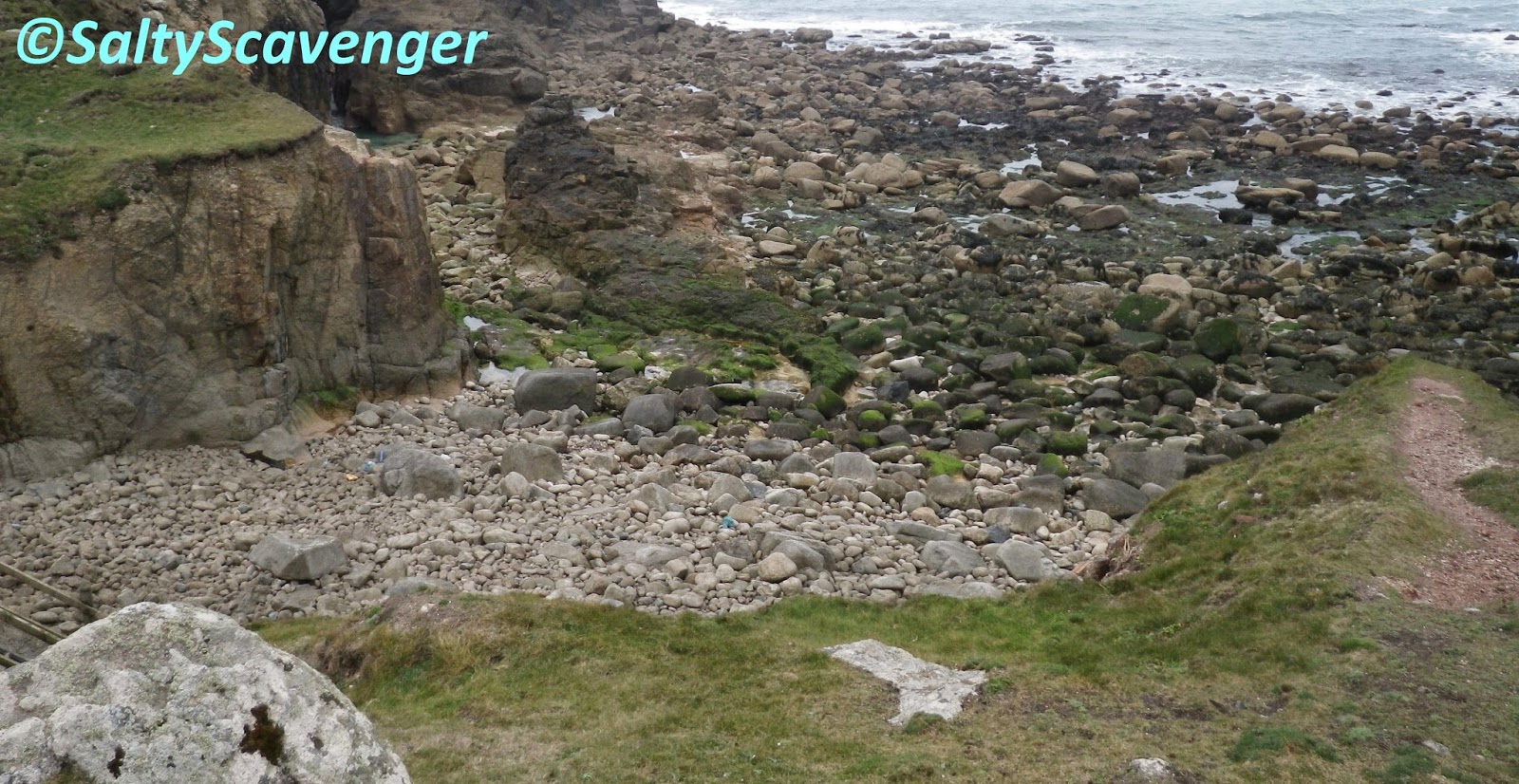
 The shore in June 2016, shows an increased fucoid and ephemeral seaweed cover since March, 2015.

The rocky shore in March 2016 exhibits increased sand deposition, reduced seaweed cover and rockpool occurrence since June 2015.

The shore in June 2015 is predominantly comprised of bedrock and boulders and has an increased seaweed cover and rockpool occurrence. 

This photograph taken in September 2015 shows the typical Fucoid and ephemeral seaweed communities that covered the bedrock and boulders of the shore which has now  been mostly covered by sand.
Rather than fucoid seaweeds ephemeral seaweeds are now the dominant seaweed on this section of the shore.

This photograph taken in June, 2015 shows an area of the shore before the sand was deposited. 
Now sand has covered much of this habitat.

Sand continues to be deposited on the shore, covering the fucoid habitat.


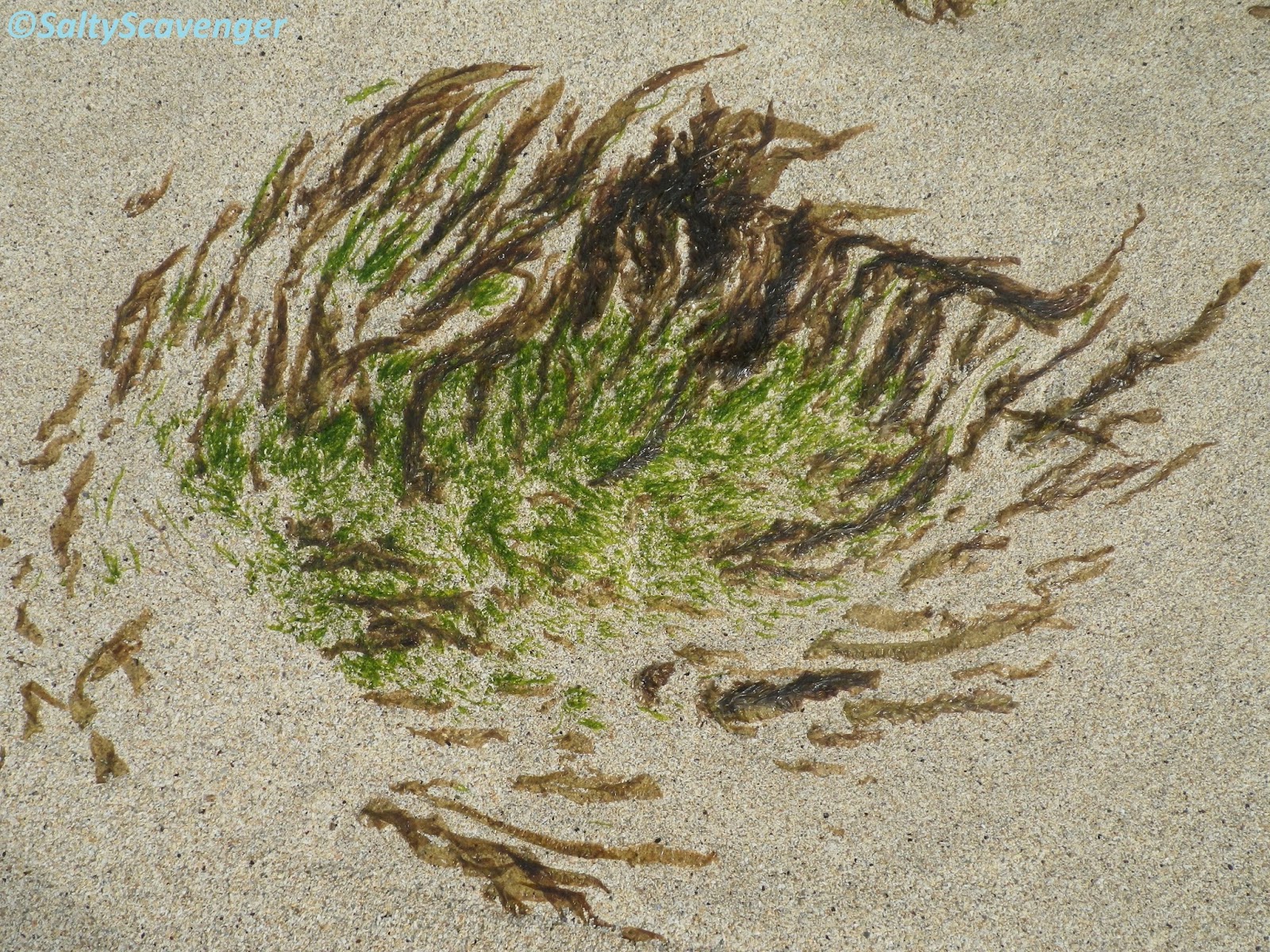
Ephemeral seaweeds such as Porphyra sp cover rocks of the lower shore.


Wednesday, 8 July 2015

Rockpooling Destination: Revisit Lands' End Penisular, April 2015 - Ephemeral seaweeds to Fucoid and Barnacle habitats

Steep cliffs surround the bay, the lower craggy edges covered in lichens. The cliff bases and steeper bedrock transition between the lichen and barnacle communities with limpets, periwinkles and whelks. Boulders and bedrock of the mid and lower shore host a similar barnacle community plus a variety of seaweeds, including where sand scour is event, ephemeral seaweeds. Rockpools occur throughout the shore, and a river flows downs from the cliffs.

The bay experiences a dynamic regime, alternating between periods of erosion and deposition. The underlying substrate is boulders and bedrock, however, variable amounts of sand may be deposited on top, sourced from the sand bar situated offshore. The communities encountered reflect the alternation between these regimes.


The shore alternates between periods of deposition (sandy)  and erosion (stony).


April 2015


September 2013                    January 2014
The overlaying sand has been eroded to reveal the boulders beneath.
At the time of visitation the cove was comprised of boulders and bedrock with an occasional thin veneer of sand.


Habitat classification:


Substrate
LR (Littoral rock)
Habitat


LR.HLR (High energy littoral rock)
LR.MLR (Moderate energy littoral rock)
LR.FLR (Features of ilttoral rock)
Biotope complex
LR. 


HLR.MusB (Mussels and/or barnacles on high energy littoral rock)
LR.MLR.BF (Barnacles and fucoids on moderately exposed shores)
LR.FLR.Lic.(Lichens on supralittoral and littoral fringe rock).
LR.FLR.Rkp (Rockpools)
LR.FLR.Eph (Ephemeral green or red seaweed communities
LR.FLR.CvoV (Littoral caves and overhangs).
Biotope


LR.MLR.BF.Fser (Fucus serratus on   moderately exposed eulittoral rock)


LR.MLR.BF.Rho (Rhodothamniella floridula on sand scoured lower eulittoral rock)
LR.FLR.Lic.Ver (Verrucaria Maura on littoral fringe rock)
LR.FLR.Rkp.Cor (Coralline crust-dominated shallow eulittoral rockpools)
 LR.FLR.Rckp.SwSed (Seaweeds in sediment- floored eulittoral rockpools).
LR.FLR.Eph (Ephermeral green or red   seaweeds (Fresh water or sand influenced)
LR.FLR.Eph.EntPor (Porphyra purpurea and Entomorpha spp. on sand scoured mid to  lower eulittoral rock)

Sub Biotope


LR.MLR.BF.Fser.R (Fucus serratus and red seaweeds on moderately exposed lower eulittoral rock)


LR.FLR.Rkp.Cor.Cor (Corallina officinalis and coralline crusts in shallow eulittoral rockpools)


 Below are images of organisms you may encounter whilst rockpooling in the upper and mid shore habitats:


One year ago these boulders were covered by sand. Now uncovered they are slowly being colonized by organisms, either from neighbouring rock or from planktonic recruitment.
Boulders and rockpools of the upper to mid shore that are influenced by the fresh water run off and sand scour are characterised by ephemeral red and green seaweeds. Habitat classification: LR.FLR.Eph (Ephermeral green or red  seaweeds (Fresh water or sand influenced) EUNIS:A2.82

The ephermeral green and/or red  seaweed biotope extends over much of the upper and mid shore coinciding with the rivers flow.
Ephemeral green algae (Ulva spp - previously Entomorpha spp)
The distribution of fauna in the mid to lower shore is influenced by wave exposure, subtidal sand scour, fresh water run off and desiccation. The result is a patchwork of biotopes that are not distributed evenly down the shore. Here fucoids and barnacles cover the boulders, whilst ephemeral green algae lace the diluted pools where the river flows to the sea.  Habitat classification: LR.MLR. BF (Barnacles and fucoids on moderately exposed shores) and LR.FLR.Eph (Ephermeral green or red seaweeds (Fresh water or sand influenced). 


Unlike the upper shore the mid shore habitats appear unchanged from October, 2014 when this photograph was taken.

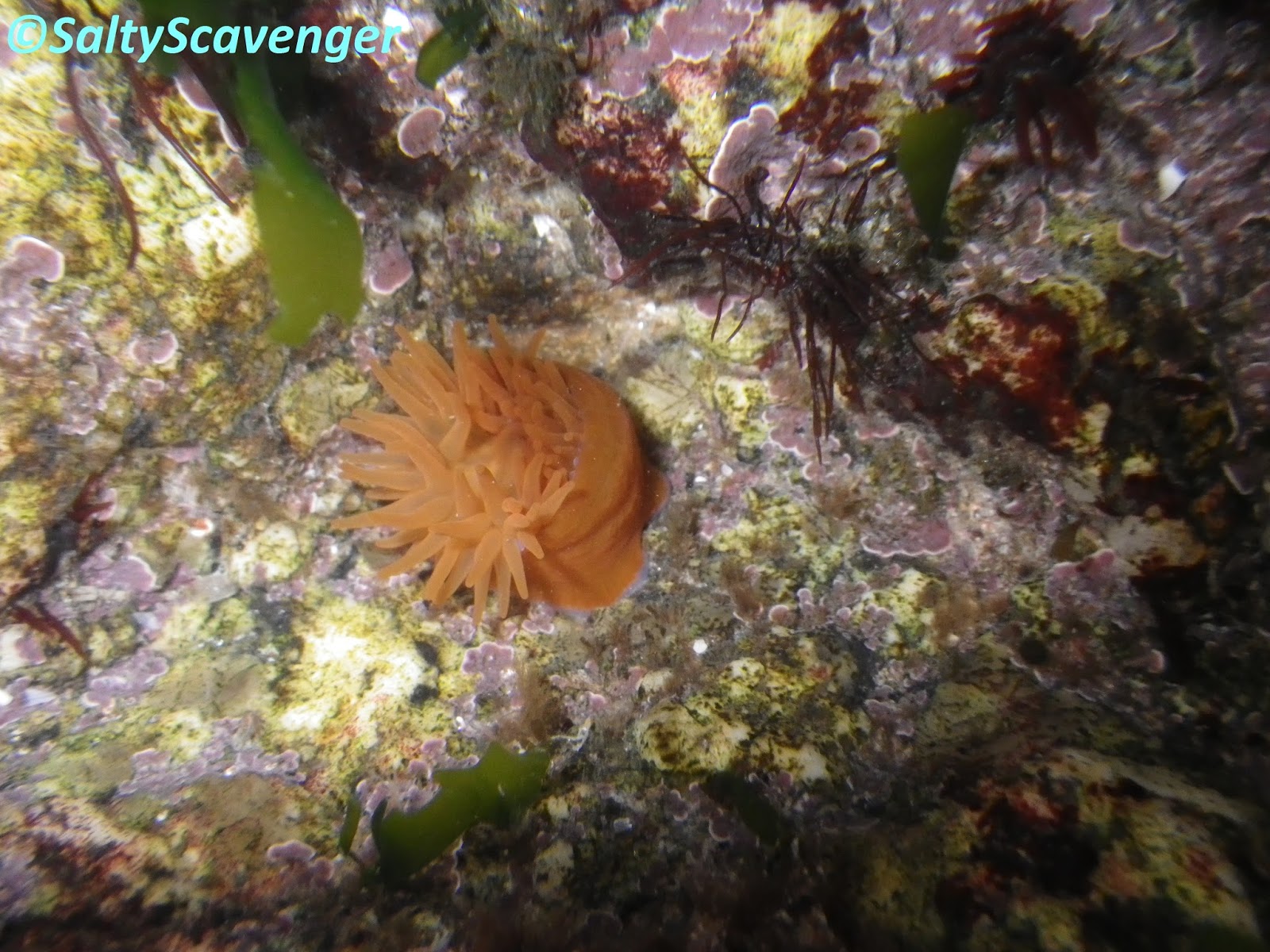
The fucoid and barnacle community of the  LR.MLR. BF (Barnacles and fucoids on moderately exposed shores) habitat comprises dog whelks, beadelt anemones, barnacles and red seaweeds, among other species....


Beadlet anemone (Actinia equina)


A Chiton, so highly camouflaged it could be missed among the coralline edged rock.


Gibbula umbilicus can be found between and under the boulders, where conditions are damper.


Limpets are able to withstand greater desiccation than other shore gastropods and are found all over the boulders, usually aggregated on the lee ward side.  

New fucoid growth, on a particularly sandy boulder. As the lower shore is reached the influence of subtidal sand scour increases and this influences the organisms found.


Fucus sp and a red seaweed.


Thursday, 19 March 2015

Rockpooling destination: Seapalling, December 2014


The shore at Seapalling is influenced by a series of artificial sea defences that have changed the dynamics of the shore to produce multiple bays comprised of mobile sands with shingle berms in between.

The hard substrate of the breakwater is characterised by a barnacle community with periwinkles, limpets, dog whelks and beadlet anemones. Sheltered areas of the lower breakwater support seaweeds, whilst beneath the sea defenses there are a network of tidal pools.

The hard substrate of the dune defenses, positioned within the sheltered bays, is charecterised by a community of spiral wrack, ephemeral algae and occasional barnacles.

Since July, 2014 certain features of the shore have changed, namely algae die back of ephemeral and fucoids.


Habitat classifications:


Substrate
LR (Littoral rock)
LS (Littoral substrate)
Habitat


HLR (High energy littoral rock)
LMR (Moderate energy littoral rock)
FLR (Features of littoral rock)
LS.LSa (Littoral sand)
Biotope complex


LR.HLR. MusB (Mussel and/or barnacle communities)
BF (Barnacles and fucoids on moderately exposed shores)
FLR.Rkp
(Rockpools)
LS.LSa.MoSa.BarSa (Barren littoral coarse sand)
Biotope


LR.MLR.BF.FspiB (Fucus spiralis on full salinity exposed to moderately exposed upper eulittoral rock)

Below are images of organisms you may see whilst rock pooling in this location:


The sea defences as Seapalling. Habitat classification: LS.LSa.MoSa.BarSa (Barren littoral coarse sand). EUNIS: A2.22 and LR.HLR.MusB (Mussel and/or barnacle communities) . EUNIS A1.11.

In addition to the offshore breakers,  anthropogenic hard substrate have been positioned at the base of the sand dunes. This provides a surface upon which seaweeds and occasional barnacles have settled. Conditions are more sheltered allowing bands of Spiral wrack to form (Fucus spiralis). Habitat classification: LR.MLR.BF.FspiB (Fucus spiralis on full salinity exposed to moderately exposed upper eulittoral rock). EUNIS: A1.212.


Spiral wrack (Fucus spiralis), exhibiting seasonal die back.


Barnacles 

The littoral sediments surrounding the sea defences continually experience the dynamic forces of erosion and deposition. At this time course sediments are distributed at the base of the defenses. Habitat classification: LR.HLR. MusB (Mussel and/or barnacle communities). EUNIS: A1.11.

  The  sediments are similar to those observed in July, 2014 except for decreased  razor shells.

Barnacles, Periwinkles and Limpets characterise the upper shore sea defences. 


Juvenile Edible periwinkles (Littorina littoria) seek refuge among the barnacle tests.


A limpet and barnacles


Barnacles and juvenile Edible periwinkles, Littorina littoera


Juvenile Edible periwinkles, Littorina littoera. High densities of juveniles are observed, yet no adults. This may be because the environment is not suitable to enable full development through to adulthood.


Barnacles and Porphyra sp.


Barnacles, Limpets and beneath the overhang, Dog whelks (Nucella lapillus).


Ephemeral green algae.


A small rockpool within the sea defences. Habitat classification: LR.FLR.Rkp (Rockpools). EUNIS: A1.41.

Tuesday, 21 October 2014

Rockpooling destination: Seapalling July 2014


The shore at Seapalling is influenced by a series of artificial sea defences that have changed the dynamics of the shore to produce multiple bays comprised of mobile sands with shingle berms in between.

The hard substrate is characterised by a barnacle community with periwinkles, limpets, dog whelks and beadlet anemones. The lower edges of the breakwater harbour occasional seaweeds, whilst beneath the sea defences are a network of tidal pools.

Since April certain features of the shore have changed, namely increased ephemeral algae growth.

Habitat classifications:


Substrate
LR (Littoral rock)
LS (Littoral substrate)
Habitat
HLR (High energy littoral rock)
FLR (Features of littoral rock)
LS.LSa (Littoral sand)
Biotope complex
LR.HLR. MusB (Mussel and/or barnacle communities)
Rkp (Rockpools)
Eph.FLR.Eph (Ephemeral green or red seaweed communities
LS.LSa.sh (Shingle and gravel shores)
LS.LSa.MoSa.BarSa (Barren littoral coarse sand)
Biotope


LR.FLR.Eph.EntPor (Porphyra purpurea and Entomorpha spp. on sand scoured lower eulittoral rock)


Below are images of organisms you may see whilst rock pooling in this location:

The sea defences provide an artificial hard substrate amongst the littoral sediments of the shore. Habitat classification: LR.HLR (High energy littoral rock) and LS.LSa.MoSa (Barren littoral coarse sand). 

The littoral sediments surrounding the sea defences continually experience the dynamic forces of erosion and deposition.  At this time sand has been eroded from the base of the defences leaving coarser sediment comprised of sand, shingle and razor shells.

The same location as above but in April  2014,shows how sediment levels have decreased in height and have changed from sand to shingle, sand and razor shells.

The same location as above but in October 2013,shows a sediment type of sand and shingle which is more similar to that observed in July 2014. 
Rocky shore communities have formed on the artificial sea defences; barnacles, limpets and periwinkles occur throughout the shore and characterise the biotope complex LR.HLR.MusB (Mussels and/or barnacles in high energy littoral rock).

Barnacles and periwinkles (Littorina sp)

Barnacles and periwinkles (Littorina sp)

During the summer months ephemeral green algae grows over the barnacles of the lower shore 

Barnacles, ephemeral green algae and periwinkles (Littorina sp)


A limpet

Common limpets (Patella vulgata), barnacles and  periwinkle (Littorina sp)

Ephemeral algae, including Porphyra sp fringe the sand scoured rock of the lower shore LR.FLR.Eph.EntPor (Porphyra purpurea and Entomorpha spp. on sand scoured lower eulittoral rock)


It appears that the erosion of sediments and subsequent increase in available rock substrate that was observed in April 2014, has facilitated the growth of ephemeral seaweeds.

These rocks photographed in  April 2014, have bare bases, caused by recent erosion and it was this event that provided additional surface areas for fast growing ephemeral seaweeds to exploit, as seen in the photograph above from July 2014.

A small rockpool beneath a boulder overhang supports a variety of seaweed species, including Coralline crusts, Ulva sp and reds. Since April there has been an increase in the growth of all species, especially the Ulva sp.

The same rock pool but in April, demonstrates the prolific growth of the green seaweeds in summer.